Showing posts with label business of translation. Show all posts

Cocktails for breakfast: Client acquisition at an online marketing conference


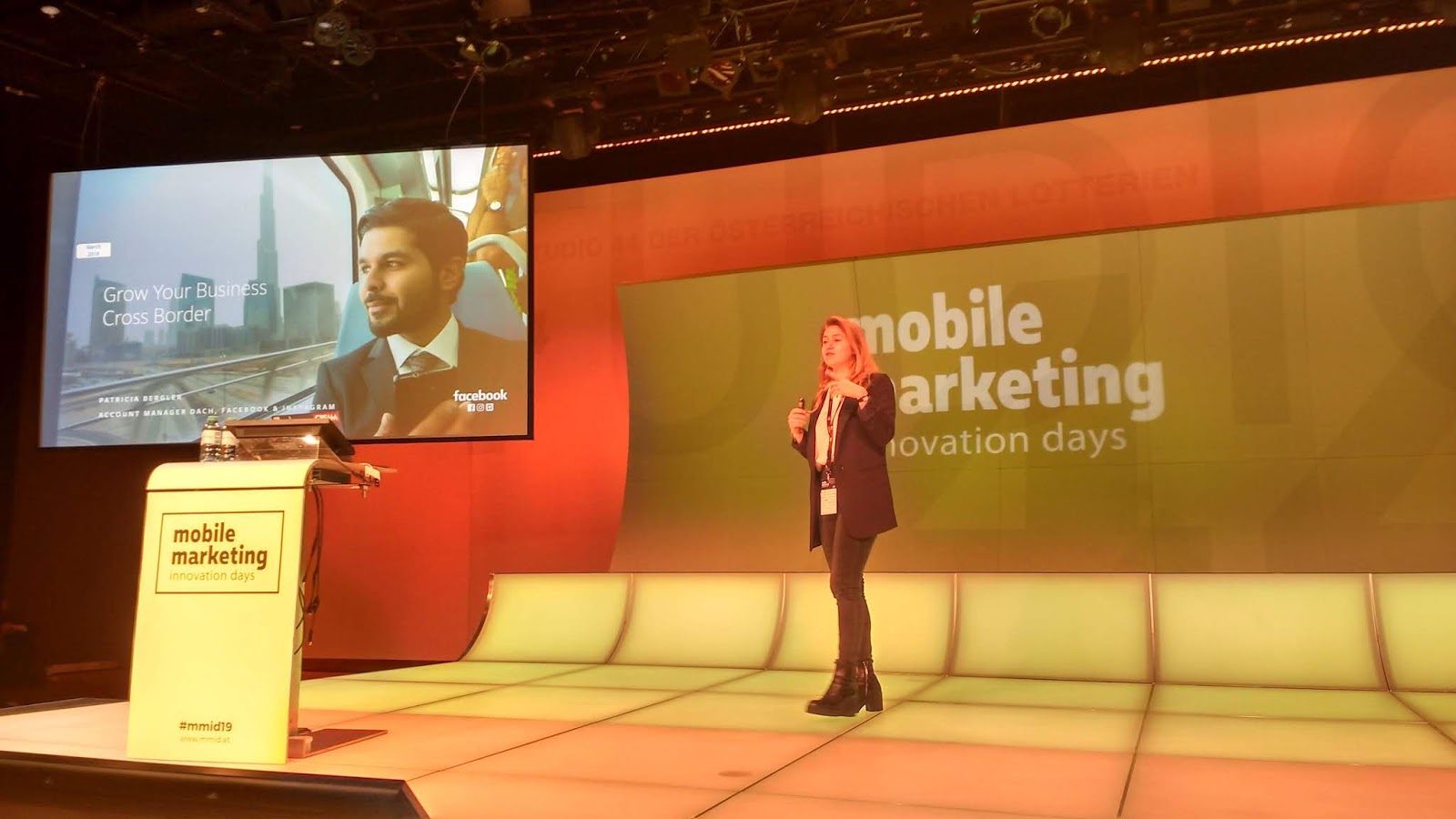
Keynote speaker Patricia Bergler of Facebook on stage
Entrepreneurs are supposed to spend time and money on client acquisition when business is good so that they will be prepared for rainy days. This is why Dagy decided to try to expand her client base at a time when she was really busy, following a slow start into the new year. Still, spending 400 euro on a 1.5-day conference that wouldn’t be relevant for me as a linguist  (but all the more as a consumer) wasn’t an easy decision. Luckily, I ended up getting a coupon for 20% off and I was ready to attend the “Mobile Marketing Innovation Days” in Vienna.  I quickly learned that the buzzword “mobile marketing” simply refers to tools and strategies used to sell products (and sometimes services) online using apps. Also, I learned that these sales are mostly done on people’s phones. The speaker line-up at the conference was quite impressive, with some of them working for the big players in the industry, including Google, Facebook, and the likes. The speakers from Google stood out for their professionalism and they also came across as really likeable, also because they emphasized that privacy was holy to them. Which is something I truly wanted to believe, given the huge amounts of data I share with Google on a voluntary basis every day.

The linguist in me heroically ignored language-related hiccups in the conference program (German/English) and elsewhere and focused on my primary goal: networking.

With a total of roughly 400 participants (most of them considerably younger than me), the conference was a good choice in terms of size because it seemed manageable and not too overwhelming. A plus was that everybody was on a first-name basis, which seems to be common in this hip and young industry and which made starting a conversation much easier. As expected, the presentations per se were mostly irrelevant for my job, but interesting from a user’s perspective. Among others, I enjoyed learning about online crime from a representative of Europol, the EU law enforcement agency.
Branded chocolates for everyone (no calories!)

Ultimately, the reason I attended the conference in the first place was the networking during breaks and after or before presentations. Other than a trained translator who now works in online marketing, I was the only translator/interpreter in sight. This fact alone ensured people’s attention when I introduced myself and I soon took to referring to myself as an “exotic species” at the conference. I always used my “ice-breaker question” about the difference between translating and interpreting, which works every time to get a conversation started. Many of the people I spoke to showed interest in my services, from marketing agencies to a pharmaceuticals company, a government agency, a university department, etc. Each and every time, I conveniently ended up talking to the person most likely to need my services, which are people working in marketing and communication departments. Talking to the person sitting next to me before and after presentations also turned out to be a good networking approach.

Even though it was an easy-going crowd, networking can be an exhausting exercise. For those who needed a little pick-me-up, vodka-based cocktails were being served as early as in the morning, thanks to a sponsor, which is certainly unheard of in the US. Drinks in hand, participants avidly exchanged old-fashioned business cards. Needless to say that it is very important to follow up on these contacts shortly afterwards using LinkedIn and/or Xing.

Here are a few takeaways from my client acquisition project at a marketing conference:
  • Don’t expect it to be easy. Making conversation with people can be hard, especially outside the US. Make sure you are willing to approach people and start a conversation. Don’t expect others to do it. 
  •  If you don’t feel like you’re in a great networking mood on the day of the event, motivate yourself and set some realistic goals such as having a meaningful conversation with three or five people and getting their business cards. I also recommend having a few funny translating/interpreting anecdotes handy. Everybody loves a good story! Asking the other person questions about their job, etc. always works, too. Who doesn’t like talking about themselves?
  • Bring a little something. After introducing yourself, go ahead and use our favorite icebreaker mentioned above. Give a small “prize” to those rare people who get in right and to those who gave it the good old college try. Years ago, I had small chocolates with my logo and my contact information made for that purpose (see below, it’s for “Texterei,” the European side of our business). People loved it!
  • Cut yourself some slack. Even though you have paid to attend the entire conference, don’t feel bad if you skip a session or two or go home early. After all, networking is not so much about quantity than about quality, but be sure to talk to a fair amount of people.
Last but not least, here is the big question: Did this marketing effort pay off? The success of marketing efforts is generally hard to measure and if at all, time will tell. My presence at this conference might result in future translating/interpreting jobs or somebody might share my contact information – who knows. One thing is for certain: meeting new people is always an enriching experience, both from a professional and a personal perspective. Needless to say, the chances of getting new jobs will increase with a linguist’s visibility, both online and offline. My bottom line was this: I had fun, I got great insight into an industry previously unknown to me, it was sometimes exhausting (after all, it was work) and I am already planning on attending other small conferences in Vienna.


New Client, New Payment Practices

Oftentimes we only hear bad news about payment practices in our profession, so we figured we'd share some good news instead. 

Earlier this week, we received a phone call from a Las Vegas law firm we know that had not previously been a client. Their translation needs were urgent and required us to drop everything, cancel dinner, and work a few hours in the evening to get it done. We usually ask for a deposit for new clients, but this was a last-minute and urgent request, so we used the highly scientific method known as gut feeling (which mostly works) and started working on the project right away. It was a small, yet intense team effort, and we delivered the project the next day a few hours before the agreed-upon deadline. We e-mailed the invoice at the same time as the project, and we received payment in the form of a check the very next day, which is a new record. We've received electronic transfers the very same day, but never a check from a brand-new client the very next day. We are not quite sure how they got it to us so quickly except that they must have prepared the check as soon as they received the quote (talk about trust!). Either way, we are very grateful for the quick payment and sent the client an e-mail to thank them.

So in spite of the many negative comments about client payment practices you may read, there are some great clients out there indeed. What about you, dear colleagues? We'd love to hear your best payment-related story!

Stockholm Syndrome

A few months ago, Judy had the honor to speak at the SLAM! (Scandinavian Language Associations' Meeting) conference in Malmö, Sweden. It was a fantastic event, and after it ended, Judy treated herself to some R&R in gorgeous Stockholm, Sweden. There she learned that the term "Stockholm Syndrome" derives from an actual bank robbery in Sweden in the 1970s. It makes absolute sense that it's based on a real event, but for some reason Judy had thought that the psychologist who coined the term was from Stockholm. Now that this had been cleared up, we started thinking about how oftentimes as linguists and small business owners, we may have the tendency to develop Stockholm syndrome with subpar clients. Of course we are exaggerating a bit here for the sake of the argument and we are not implying that your clients are holding you hostage, but allow us to expand (and you can read up on Stockholm syndrome here):
Stockholm in September. Photo by Judy.


  • Some clients are just not good clients.
    If you have a client who repeatedly does not pay you and keeps on asking you to take on more work, either politely decline or ask for payment up front. No need to feel bad for them. You need to look out for your business interests, which mainly include getting paid for services rendered.
  • Some clients are abusive. We've all heard the stories: there are clients who are so unreasonable that they are having a negative effect on your mental health. These are few and far between, but if this ever happens to you, you need to walk away without feeling bad. You should actually feel very good about the fact that you are not an employee but a contractor or freelancer, which means you are free to work or not work with whoever you choose. We agree that walking away from good work can be hard, but even if the work is good, there's no reason you should put up with an abusive client. Of course there's no one definition of what "abusive" means, as we all have different levels of tolerance, but in our book if you are thinking about a specific client more than you want and those thoughts are stressful, it's time to say good-bye, in a very professional and friendly way.
  • Speaking of saying good-bye: We oftentimes get the question about how to exactly phrase it. You need to use your own style and tone when drafting these messages, but here are some ideas. You don't necessarily have to give a reason, but you certainly can if you would like to (we prefer to keep things very short and spend as little time on it as possible to cut our losses).
    • "Thank you very much for your interest in my services. I hereby kindly inform you that I will not be working with your firm/company in the future."
    • "Thank you for your past business. It's been my pleasure to provide top-notch services for your firm/company, but I will not continue to do so in the future. Kindly remove me from your list."
    • Option 3: Do nothing, don't respond, and perhaps (in extreme cases) block the sender. This is not an option we would go with, but it certainly might be an idea.
What do you think, dear colleagues? Have you suffered from Stockholm syndrome? If yes, how did you resolve it? We'd love to hear from you.

Get Rid of Robo Calls: Hiya App Review

No matter where you live, one of today's modern inconveniences are robo calls or unwanted cold calls from marketers, and this is especially true for small business owners in any industry. Ours is no exception, and many T&I professionals run their businesses with a cell phone instead of both a land line phone and a cell phone. Either way is of course fine, but the issue of unwanted phone calls remain, and they are not only annoying but also take away time from actual important work-related tasks. So what can be done to reduce those unwanted calls? Judy tried an app for her Android phone called Hiya and it works really well. Here's her quick review.


  • Hiya is actually free and has no ads. You can download it here by entering your cell phone number. Available for Android and iOS.
  • Basically Hiya is an additional layer on top of the phone. Say someone calls you who's not in your address book. Your regular phone service will not identify the caller, but Hiya will. It will also add the helpful "spam suspected" warning to the call screen so you won't waste your time picking up the call.
  • Some unknown numbers -- we haven't really been able to figure out how Hiya determines which numbers -- will receive a text message thanking them for their call and asking them to identify themselves. In our experience, Hiya is smart enough to only send these messages to actual cell phones, and the caller gets the option to type in their name and their query. Robo callers will not do that, so problem solved. Hiya has sent these automated text messages to actual real new customers, but in our experience, they were not that bothered and simply typed in their name, got cleared by Hiya, and called again. 
  • Hiya's caller ID is incredibly powerful -- it will identify pretty much any caller. That's how Judy found out that CNN was calling her for an interview a few weeks ago (more on that in a future post).
  • You can look at your missed calls on your regular phone interface, but going to the Hiya interface identifies the caller quickly, so you can see, at one glance, if you missed a call from a potential or current client you might not have saved in your contacts. You can then prioritize those phone calls, for instance if you see that you missed a phone call from law firm XYZ.
  • In summary: I've been using Hiya for a few months and it's blocked at least 5-10 spam calls every day, which makes my work life more enjoyable and I actually enjoy answering the phone now because I have not taken one single robo call since I've had Hiya. It's definitely one of my favorite apps right now.
We hope you find this post helpful, dear colleagues! If you have found a similar solution that also works great, please do share it with the community. 

Guest Post by Jesse Tomlinson: Who's Watching?


Who’s Watching?

You never know, do you? Even if you’re excellent at visualizing, it’s often impossible to guess who might be watching you when you put yourself out there.

What’s your ideal professional image? What are you transmitting? Is it consistent? Does it accurately reflect your business focus?

What’s in a client? They say it takes seven points of contact to get someone to like, know and trust you, which is what building client confidence is all about. When was the last time you worked with someone you didn’t particularly like? Chances are it was someone who gave you specialized service, someone so knowledgeable that even not liking them, you still wanted to work with them.

Direct Clients

Working with direct clients takes years of investing in professional relationships. Typical recent advice directs us to go to expos, become more knowledgeable in our fields, go to client events and be well versed in their companies, and current events generally – all activities that take years to cultivate.

But as you go about your day-to-day life, professionally and personally, it can be hard to separate your private and professional lives, because you never know in whose company you might find yourself, and whether those people might be potential clients, people who have heard of you, or even someone who is already your client but whom you had yet to meet in person!

Professionally you might have the idea that people are getting to know you, reading things you write, and perhaps even following your work on Twitter. I see myself as a go-after-clients kind of freelancer, but have you ever considered that clients are out there hunting you, too? Waiting to see how well you do with current projects so they can consider using your services in the future? Maybe mystery client 992 has a big initiative coming up in two years and is thinking carefully about who the lucky translator will be to do it.

Proz invited lucky li’l old me to participate on The Pros and Cons of Working with Direct Clients, a panel discussion with Patrick Weill and moderated by Paul Urwin, Sept 26 2017, in honor of International Translation Day. This was a big moment for me and a great experience. But I never imagined that a former major US network news anchor (someone I had known for two years) would be watching and noting what I was saying about translation! I was taken aback. And that’s when I realized that most of us can’t imagine who is watching or listening in on our professional careers.

Paying attention to who could be watching us professionally is a no-brainer, right? But what about when we are wandering the world at large, casually and “off-duty”? Is there ever “off-duty” for a freelancer?

Clients, Clients Everywhere

You may have heard that airplanes are great places to meet clients, and interesting people in general. But have you ever thought that every single person you sit next to on an airplane is a potential client or source of referrals? Thinking this way is a good start to meeting more potential direct clients.

Everything you do matters. Every interaction counts. And it all adds up to the reputation you want to cultivate as a business person.

I was recently a dinner for fifteen, at a private residence where I had already met six of those present. It was a lively night with much heated controversial conversation and opinions flying high. About four hours in, a woman there told me she knew exactly who I was. She was one of my clients whom I had never met, and since we had only exchanged first names when casually introduced earlier in the evening I hadn’t made the link to my professional connection with her. It was a great reminder that you never know who you’ll run into, even when you’re in casual mode with friends.

Who’s watching you?


Jesse Tomlinson is an interpreter, translator, and voice talent. Originally from Canada, she now lives in Mexico and translates from Spanish into English and interprets in both languages. 

She is currently translating Latin American authors born in the 1980s into English for Proyecto Arraigo. See her essay on uprooting (“La vida sin limones”) at http://bit.ly/la-vida-sin-limones. Contact: jesse@tomlinsontranslations.com.

Webinar: Negotiating Skills for Linguists

Image created on www.canva.com
We know, we know: negotiating is probably most linguists' least favorite part of the job, but it doesn't have to be painful. Join Judy and the CLEF in Québec (Carrefour des langagiers entrepreneurs/Language Entrepreneus Forum -- go entrepreneurs!)  on Friday, December 8, 2017, for a pre-holiday webinar on how to make everyone, including yourself, happy when negotiating contract terms -- but maybe not always. It's important to keep in mind that the negotiation process doesn't have to be something negative and adversarial. Sometimes it's good to look at it just as a conversation during which each party gives and takes a little.

Note: the webinar will be presented in English.

Here's a webinar abstract:
Regardless of your profession, negotiating is often everyone’s least favorite activity. It can be stressful and intimidating for linguists, but it doesn’t have to be. It’s also an opportunity to hone your skills, try new strategies, and even cement your business relationships if done right. It takes practice, patience, and the willingness to assume some risk. During this webinar, the speaker will take you through some of the main things to keep in mind when negotiating with potential and existing clients.

You can register for the webinar here. Hope to see you there and happy negotiating!

Budgeting for Quarterly Estimated Tax Payments

Norwegian kroner, because we had the picture handy. Photo by Judy.
If you are like most small business owners here in the U.S, in our profession or any other, you are probably quite familiar with quarterly estimated taxes, which are due four times a year. We generally think taxes are a great thing, and that they are one of the main things that make a society work, and we are happy to pay them. But sometimes small businesses run into cash flow issues and occasionally you have to scramble to come up with the estimated tax payment when it's due. It's happened to us, too, and while we have always been able to pay it, we figured we needed an easy way to guarantee the money is there when we need it.

The strategy we started using is quite simple, but one we had only used intermittently before: every time we deposit a check into our checking account or receive a payment via online banking transfer (which they all should be, but we digress), we immediately take 20% of each payment and transfer that into a savings account that's used to pay taxes. The two accounts are with the same bank (Chase, as much as we dislike them at times) and the transfer is quick, easy, and free. Since the money goes out so quickly after it's been deposited, we don't really miss it, and we ware delighted to have it come tax time. 

What do you think, dear colleagues? Do you follow a similar strategy?

Personal Document Translation: What If I Can't Read Something?

The last post of the month is about a topic that's not very glamorous, but can be quite lucrative: personal document translation. Oftentimes, linguists shy away from it because dealing with non-businesses can be time-consuming and it's happened more than once that you don't get paid. We avoid this by kindly asking for pre-payment for personal document translations. We've translated hundreds of documents for dozen of government agencies around the world, and one of the most frequently asked questions we get from new colleagues is: what do you do if you can't ready something? Allow us to share our thoughts.


  • Ask the client. The beautiful thing about working directly with individuals who most likely are the owners of the documents in question is that you can easily go to the source. This is important for handwritten documents where say, the place of birth is noted but it's a small province in a country you are not familiar with. In these cases, we do think it's perfectly acceptable to ask the client, as they would obviously know where they were born.
  • When to put [illegible]. While there are no hard and established rules on this, we would never guess or fill in the blanks (more than a letter or two) if the portion we cannot read is typed but either too faint to read, cut off, etc. In that case, even if the client could solve it for us, the issue is readability of the document (rather than sloppy handwriting), and in such cases, we usually put [illegible]. Most of our colleagues have tended to handle it this way, but of course there are other approaches.
  • Requests for changes. You'd be surprised how often clients have asked us to change their birth date (because it was incorrect on the original or for other, significantly less legitimate reasons), name (because they have since gotten married or divorced), or simply asked us to translate parts of the document and exclude others. However, that gets us into the dangerous territory of document falsification, and you want to steer as clear of that as humanely possible. Since these document translations are almost always certified and notarized, we never change, add, redact, etc. anything at all -- no matter how small. Explaining to the client that document falsification is a crime in which you will not participate usually does the trick.
  • Certifying other's work. This is a bit off-topic, but still related. Oftentimes clients will say that they "just translated this themselves since they speak both languages" (we can see the collective eye roll from here!) but that they want a "real" translator to certify their work. We gently point out that we cannot say the work is ours when it isn't.
What about you, dear colleagues? Do you handle this in a similar fashion? We would love to hear your thoughts. Just leave a comment below!

Business Tip: Indicating Validity of Quote

Happy Friday, dear readers! Before we head off into our holiday weekend here in the US, we wanted to share a quick and easy business tip that can have major impact on your workflow.

It's about something relatively simple: including a specific date on your price quote that indicates how long the quote is valid. This is especially crucial for time-sensitive projects for which you might have to reallocate time from other work. Please note that this applies to direct clients, as most agency clients traditionally ask linguists to sign the agency's purchase order (to which you can, of course, also make changes and/or additions).

Consider the following scenario: your client calls on June 28 and says she needs the translation of a contract by July 5. This is a bit tight with the holiday weekend, but you are willing to make it happen (with surcharges, of course), as she is a great client. In your quote, it's essential to include that you need the client to confirm the project by a specific time and day. Otherwise, it could happen that you never hear from the client, you take on other projects, and then on July 4 (Independence Day!), she calls you to tell you she wants the project by the original deadline, July 5. That's obviously not a good scenario, so you should do everything you can to prevent it.

Here are a few ways to do that.

In your price quote, include something to the effect of (please note that we are not lawyers, so if you want specific legal advice on the language to use, please contact an attorney):

The present price quote is valid until ____________ at ____ am/pm. This quote shall be null and void unless the client has confirmed it in writing by signing at the bottom of this document by _____________. 


In order to meet the client's deadline, this project must be confirmed in writing by ________ at _____ am/pm. The translator can only guarantee the agreed-upon delivery time and date of ______ at ____ am/pm if the client sends back the signed price quote by ______ at am/pm. If no confirmation is received by that point, this quote shall be null and void. 

What do you think, dear colleagues? Do you have any other and better ways of handling this? We have found that putting all these things in writing make for much smoother business transactions and for happier providers and clients.

Free SDL Webinar on June 27: The Art of Networking

Networking at the BP17 conference in Budapest, Hungary.
Please join us for another free webinar on in-person and virtual networking, presented by Judy, and organized and hosted by our friends over at SDL. It's free for everyone, and you simply sign up with your e-mail address. Judy's last webinar for SDL on June 8 had more than 800 sign-ups (thank you!), and we would love to "see" you at this one as well. Consider signing up even if you cannot attend the live session, as all who registered will then receive a link to the recording a few days after the webinar.

Networking is such a crucial part of our profession -- and of any profession, actually -- yet as linguists we oftentimes neglect it. You can only grow a business if you grow your circle of influence, and Judy will share a few ways to do this, both offline (meaning in person) and online. One hour isn't nearly enough to talk about this important subject, but we will address many key points.

Here's the link again to sign up. Looking forward to it! 

Free SDL Webinar on Negotiating: June 8

Image created on www.canva.com
Please join Judy and a few hundred colleagues (if past webinars are any indication) for a free webinar organized by our friends over at SDL. This webinar has nothing to do with their software, but rather, this is a series of webinars on  both technology and business topics with well-known speakers from around the world that SDL offers for free to all colleagues around the world.  You just have to sign up and provide your e-mail address.

Next week, on Thursday, June 8, 2017, Judy will have the pleasure of talking about an important but seldom discussed topic in our industry: negotiating. How do you do it while making everyone happy? Can you? How can you get what you want and still make the client happy, too! Log on and find out. The full title of the webinar is: How to negotiate with potential and existing clients whilst maintaining good relationships.

Once again, here's the link for you. "See" you online?

Our Favorite Travel App

A few years ago, Judy had the opportunity to attend the (short-lived) Vegas version of the legendary technology conference South by Southwest, and it was a fantastic event. One of the best presentations was by Sam Shank, who is the CEO of an app we had never heard about until that point: HotelTonight. Sam spoke about some interesting graphics elements in HotelTonight and how they came up with their simple, yet powerful logo. Sam seemed like a nice guy, and Judy immediately thought about approaching him with the question: do you have international versions of your app? If not, do you want them? We can help! Approaching him took some courage, but he was very friendly and open, and turns out they were already working with our client and friends over at Smartling (who provide the awesome technology for multilingual apps) and their team of freelance translators, so we weren't going to pursue that lead, but we decided to check out the app.  Turns out it's fantastic!

It's available for all major platforms (we use the Android version), and the design is every design geek's dream: sleek, pretty, functional. Basically, it works like this: you can book tens of thousands of hotels around the world (unsold inventory), either for the same night or up to seven nights out. We wondered who waited until the last minute to book at hotel, and turns out a lot of people do. We used it when Judy and her hubby were stuck in a very subpar hotel in South Dakota and needed to find another one ASAP: HotelTonight delivered. We used it in Athens, Greece, when the entire city was inexplicably booked out, but HotelTonight came to the rescue. When we arrived, the hotel had no record of the reservation, though, but it got resolved and we received a HotelTonight credit for our trouble. Since then, we've used HotelTonight dozens of times in a variety of countries, including Hungary, and we have been very pleased. The only downside is that you cannot select bed type -- it's automatically assigned to you, but the deals we have found (up to 60% off the hotel rack rate) are so amazing it's worth it. 

We also love the clever copywriting and hotel descriptions (which can be notoriously boring on other sites and apps). Our favorite recent score: $120 a night for the Sheraton Fisherman's Wharf in San Francisco on a trip with our dad. Our clients also love the fact that we use HotelTonight to get good deals when travel is billed to them. So there you go: that's an overview of our favorite travel app. And for the record: they are so not paying us for this post. On a final note, one of our dear colleagues is translating the app into German; we can't wait to see it.

Basic Listserv Etiquette

Happy Friday, dear colleagues and readers! Today's quick observations revolve around mass e-mail lists, usually organized and hosted by a professional organization. These are known as listservs, and they are a very valuable tool for translators and interpreters. We are members of myriad listservs hosted by many T&I organizations, such as ATA, NAJIT, Universitas Austria, and others. We have found these listservs to be very enriching, on both a professional and personal level.

Unfortunately, throughout the years we have noticed some very disheartening trends, including rude and completely inappropiate messages, personal insults, and everything in between. Perhaps it's a reflection of our society in general that civil discourse has deterioriated, but we still believe that most of these interactions can and should be positive. That being said: we do think some of the tone used on listservs is getting worse these days, and we'd like to share some thoughts on the topic. Ready for some tough love?


  1. Your colleagues and potential clients are reading what you post and respond. Keep in mind that responses and/or posts will go out to everyone on the listserv, which can be in the thousands. This is not the place to pick fights, air dirty laundry, or have unreasonsable disagreements with anyone in particular. Take those offline or contact the person in question directly. We don't frequently respond to posts, but we read most of them, and we always take note of unreasonable and disrespectful posters and make sure to not work with them -- and many other linguists do to the same. 
  2. Know your technology. Oftentimes we see linguists post along the lines of "Please remove me from these mass e-mails, they are stupid and annoying." Such a message is not only not appropiate to send to the entire community, but it also reveals a lack of understanding about technology in general and listservs in particular. You don't want to be known as the person who struggles with basic technology. In general, listservs are opt-in only, and the user controls how they want to receive messages. An "unsubscribe" link is usually conveniently located at the bottom of messages, but you have to unsubscribe yourself. No one can do it for you.
  3. Be helpful. The idea behind listservs is, in part, to strengthen the community from within by sharing information, resources, interesting articles about our profession, and to help solve tricky terminology issues. If you can contribute, be sure to do so -- but agree to disagree. There are many ways to skin a cat or to solve translation puzzles, and it's important to respect others' solutions. We've often found that arguing over who is right makes linguists seem petty and close-minded, and remember: those reading might become clients, and petty and close-minded are not good traits. Sorry about the tough love here, but we've literally seen (and read) it all, including colleagues being banned from listservs by the moderators (yes, really) for bad behavior. This is undoubtedly bad for your reputation and for your business.
  4. Think before you post. Translators spend a lot of time by themselves, so sometimes the almost-human interaction that listservs provide can be a very welcome distraction. That being said, think before you fire off a response in anger. You will never be able to take it back, and do you want, say, 3,000 of your colleagues reading something you wrote while angry? Don't do it. If you wouldn't say it to anyone's face, there's no reason to type it. The same rules of basic human decency still apply online, and you can't hide behind an anonymous e-mail address --although incredibly, some do.
  5. You don't have to read everything. Some of the complaints that are frequently aired is that "I don't find this interesting." Well, that's reality: you won't find everything that's posted interesting, but someone will. It's not about the individual, but about the community, and if you don't find the subject line interesting, don't read it. Our tip: switch your message delivery options to "daily digest" instead of getting each individual message or set up an e-mail rule on your Outlook (or whichever program you use) to send all listserv messages into a special folder so they bypass your inbox and you can read them at your leisure.
So that's it; a short summary of some things we think we can all do to make listservs even more enjoable for all. We'd love to hear your comments. 

Waiting for Translations: New Pricing Model?

On call: doctors and translators.
The German-speaking blogosphere recently saw an interesting discussion about pricing models for translations centered around whether should you should charge by the line/word or by the hour/project, which is an important topic, as is pricing in general. While the jury is still out on this one (we personally like the hour-based approach for certain projects and have written about this issue extensively), Dagy recently had a very unique request from an advertising agency client that we'd never had before: they asked her to provide a quote for her availability for possible translations, six days in a row, including the weekend.

After consulting with her favorite business partner, Dagy decided to charge EUR 500 per business day and EUR 750 for every day of the weekend, plus a slightly discounted rate per line for any translations. In exchange, she guaranteed permanent availability and the fastest possible completion of all translations, every day from 9 a.m. to 6 p.m.  Even though we've worked hard on developing and insisting on professional rates for our services, Dagy did fall into the stereotypical self-exploiting freelancer trap with one thing: she didn’t even think about including a lunch break in her quote. We've made many business mistakes, and we usually don't make the same one twice, so next time we will definitely contractually set a lunch break. Lesson learned!

The client happily accepted after zero haggling. Dagy had to cancel quite a few appointments she had scheduled during those days, but it certainly paid off. Most days, she received no translations. On two days, she did a lot of translations, which had a nice impact on the final invoice. While Dagy did feel a little limited in her daily activities, she was certainly happy with what ended up being a highly lucrative week. During her stand-by times, she also proofed several hundred pages of a German-language annual report, which is per se a major project, and also worked on a wide variety of other client projects.

We believe this experience goes to show that even very unique pricing models are possible in our industry and that clients are prepared to pay adequate prices for extraordinary services. Why not keep that in mind next time you negotiate with a client?

By the way: what Dagy ended up translating were documents regarding a highly confidential company acquisition by a large European company. The estimated purchase price was in the billions. It does feel nice to have been part of such a major deal, even to a very small extent. 

While a friend suggested she use part of that money (it was, after all, a lucrative week) to upgrade to business class on her upcoming flight to the US, Dagy decided to put some of the money aside for future tax payments and to make a donation to the United Nations High Commissioner for Refugees (also known as the UN Refugee Agency) to benefit people who are much less lucky than she is. 

On Making Rates Public

Image created on www.canva.com.
Happy Friday, dear readers and colleagues! Today's quick post is about making or rates (or fees) available publicly. We have chosen to do so, but we understand that many linguists choose the opposite approach. We think it's an interesting topic indeed, and here are some of our thoughts on this:


  • In general, we believe transparency is a good thing for the market and for the industry. We don't really see too much of a downside n making rates public. Most other businesses and service providers do.
  • It's important to think of the client. Think of yourself as a customer: if you are on someone's website, and when you click on "rates" and it says "please call," do you really call? Or do you simply go to the next provider who does disclose rates? We usually do. 
  • Making your rates public saves you time. We don't get too many e-mails of potential clients just asking our rates without having a specific project in mind that we can quote on, but when we do, we simply e-mail them a link to our rates. Most potential clients will have already seen them on our website, though, which saves both them and us time we could also spend on better things.
  • We very much understand the argument that some collleagues don't want to publish their rates becuase they are afraid it's not good that they charge different clients different rates. There's nothing wrong with that, though. This is an unregulated industry, and you are welcome to use price differentiation. Pretty much every business on the planet does it. For instance, your glass of wine is cheaper during happy hour at the bar than an hour later and ten feet away in the restaurant area, skiing is more expensive on Saturdays than on Wednesdays, and seniors get a discount on train tickets. You get the idea - it's fine to offer different price points, including discounts to certain groups (non-profits, teachers, military --whatever works). If you'd prefer to post a range, which we think is a good idea, go ahead and do that.
  • Oftentimes, colleagues mention that they are afraid of pricing themselves out of the market. That's a good point, but once you set rates at a level that work for you, you should probably stick to them -- and they shouldn't change too much, whether you disclose them publicly or not. And you probably don't want the bottom-feeder clients who want to pay peanuts anyway, right? The bottom line: you will definitely price yourself out of some work (we all do), but your best bet is to go after the business you want at a price point that allows you to be a happy linguist who runs a profitable small business. 
So those are our main thoughts on this topic -- what do you think? We'd love to discuss this important topic here on this forum and look forward to your comments. 

BP17: A Translation Conference, Reinvented

This May, we are both quite excited to be heading to the same conference together: BP17 in Budapest, which is organized  by our colleague Csaba Ban (yes, remarkably, there's  no big association or organization behind this conference). Throughout the last few years, we've heard amazing things about this conference, and this year, Judy is honored to be a speaker at the event. 

What we love about this conference is that it is quite different from traditional T&I conferences, and we are always looking for interesting and new experiences. The twelve TED-style talks (limited to 20 minutes) will be given by a great selection of speakers from four continents, including Paula Arturo, Nick Rosenthal, Michael Farrell, Jonathan Downie, and many others. These short talks are a great idea to get lots of information in a short period of time, and we also happen to love TED talks (who doesn't?). These will be held on May 5, and May 4 will be all about masterclasses, including Judy's. There are six of them -- and one of them is an ATA certification exam, which is fantastic, as those are relatively rare in Europe. As you can see, Csaba has been busy! May 6 will be a more traditional conference day with lots of sessions to choose from, which we look forward to. Half of the sessions will focus on business, which we applaud -- we need more conferences that focus on business, as we are all businesspeople first and linguists second. All sessions on May 4 and 6 will be held at the Hotel Arena, the
conference hotel.

And there's the venue for May 5, which we are already drooling over: a beautiful old movie theater called Urania. It's the loving maintained theater that you wish you had in your hometown -- and we bet it will make for a great picture backdrop!

Unlike many other conferences, if you purchase a full pass, the price will include a farewell dinner, which will apparently turn into a party (count us in) as well as lunch. The best deal is the 2-day conference pass (masterclasses are extra), and you can bring a guest to the farewell dinner for EUR 42. The two-day pass is quite reasonably priced at EUR 239, and the conference hotel is affordable as well. Amazingly, Csaba has also organized several day trips that can be booked separately -- we just might go to one of them. These trips are something we have never seen at American conferences, and we are all for them. There's nothing quite like getting to know your colleagues while on a short trip.

So in case you cannot tell: we really are very much looking forward to this conference, and look forward to seeing all our friends and colleagues. We've been to Budapest before, and it's a spectacular city. See you there the first week of May?

Quick Negotiation Tip: Final Offer

Happy Friday, dear readers! Today's quick negotiating tip comes, as always, from our own practice.

First things first: just like most people, we don't love to negotiate. We could certainly be better at it, and we are working on it. One thing we've learned recently that oftentimes it pays off to never stop negotiating, even if the other person says the famous words of: "This is my final offer." 

A few weeks ago, while negotiating an interpreting contract, the client, in a very friendly conversation, told us a number that she said was going to be her final offer. We've also learned not to say yes or no right away, but to ask the client if we can think about it, which has served us well as a negotiating tactic. We employed it this time, and the client said sure, that we could think about it for a day or two. Then we talked amongst ourselves: she said this was her final offer, right? Does that mean we do not have a choice but to accept it? We mulled this over a bit, and we came to the conclusion that of course we do not have an obligation to accept it. Everything is still negotiable until one party walks away, an outcome you (mostly) want to avoid (unless the terms don't work for you at all). So we decided to gamble (there is always some risk) and decided to counter one more time. We figured that our client could always reject our counteroffer, which would put us back at square one, but we decided we would cross that bridge in due time.

So we sent a friendly and upbeat email saying that we would love to work with them, and even though their offer wasn't the number we were looking for. We stated that we were willing to work with them and offered a more reasonable rate at X. We told them we looked forward to working with them, and lo and behold: they accepted and everyone is happy.

Lesson learned: a final offer is only a final offer if you accept it. It's usually worth negotiating to see what happens. A caveat: if you really need a particular project, this strategy might not worth be the risk. This is a classic risk/reward scenario, and it requires willingness to assume some risk. Happy negotiating! We would love to hear your negotiating tips if you are willing to share them with us and your colleagues.

Upcoming Classes: University of Denver and University of California-San Diego

Another exciting year in the world of T&I is coming to an end, and we'd like to thank all our friends and readers for following this blog, for reading it, and for being part of our fantastic community.

Before we head to Berlin to celebrate the arrival of 2017, we wanted to give you some information about upcoming online classes that Judy will be teaching in the next few weeks. Her class at the University of Denver is brand-new: the 10-week online class titled "The Language Services Business for Translators and Interpreters" is part of UD's master's degree program. Please read on for more information:

1) University of California, San Diego-Extension (online): Introduction to Translation. This popular five-week course starts January 10, 2017. Spanish/English. No prerequisites. Tuition: $250.
2) University of California, San Diego-Extension (online): Introduction to Interpretation. Starting February 14, 2017, aspiring interpreters can get a solid overview of the profession to decide if it's for them. Spanish/English. No prerequisites. Tuition: $250.
3) University of Denver (online): The Language Services Business for Translators and Interpreters. This brand-new 10-week class will commence January 3, 2017. It's part of a master's degree program in Global Studies at the University of Denver, so there are some prerequisites. Language-neutral. Tuition: $628.

Have a happy and healthy start into 2017!

Celebrating Each Other: Happy International Translation Day

Congratulations to all our lovely friends and colleagues around the world! September 30 is International Translation Day, and we celebrate St. Jerome, but of course that includes interpreters as well.

Instead of announcing some cool new conference or celebration, may we suggest we all do something very simple to strengthen our community and our profession? It goes like this:

1.) Find a colleague who happens to be in your city permanently or on business/vacation. Pick someone you have never met before or someone you don't know well.
2.) Drop him or her an e-mail (or call!) and extend an invitation. It can be for coffee, for dinner, for drinks--whatever works. 
3.) Meet up, enjoy, and network! You will have probably made a new friend, and if not, a new colleague. There's nothing quite like breaking bread, sharing a glass of wine, or just talking with someone you don't know well (yet), but who is in your same industry.

Judy has started with this and has invited a lovely colleague who's visiting from Argentina to stay at her house for a few days--it should be a lot of fun.

What do you think, dear colleagues? Will you join us in celebrating our profession and each other?

Let's Talk About Rates

Image created on www.canva.com
Our lovely colleague Jo Rourke of Silver Tongue Translations in the UK is hosting a live chat to discuss something that's very near and dear to all translators' hearts: rates

It's oftentimes not discussed enough, mainly due to restrictions on doing so (price fixing), but these are important conversations to be had, especially for newcomers to the profession. The live chat is completely free, but is limited to the first 100 linguists who sign up. It will also feature some give-aways! Here's the link. There's even a cool video! Please join Jo for this awesome-sounding event on Wednesday, October 5th at 8 p.m. London time, which is 12 pm Pacific and 3 pm Eastern here in the U.S. We just signed up ourselves.


Join the conversation! Commenting is a great way to become part of the translation and interpretation community. Your comments don’t have to be overly academic to get published. We usually publish all comments that aren't spam, self-promotional or offensive to others. Agreeing or not agreeing with the issue at hand and stating why is a good way to start. Social media is all about interaction, so don’t limit yourself to reading and start commenting! We very much look forward to your comments and insight. Let's learn from each other and continue these important conversations.

Subscribe by email:


Twitter update


Site Info

The entrepreneurial linguists and translating twins blog about the business of translation from Las Vegas and Vienna.

Translation Times